研究概要
太陽系の形成・進化過程に興味があり、特に太陽系誕生から1千万年間(= 初期太陽系)の歴史について研究しています。地球外物質(隕石やリターンサンプル)の化学組成や同位体組成は、惑星の母体となる原始太陽系円盤の物理化学的条件や惑星形成過程を理解するための重要な手掛かりとなります。地球外物質の高解像度観察・高精度化学分析を通じて、太陽系を構成する物質が「いつ」「どこで」「どのように」形成されたかを明らかにしたいと考えています。
1) 初期太陽系における固体物質の形成過程
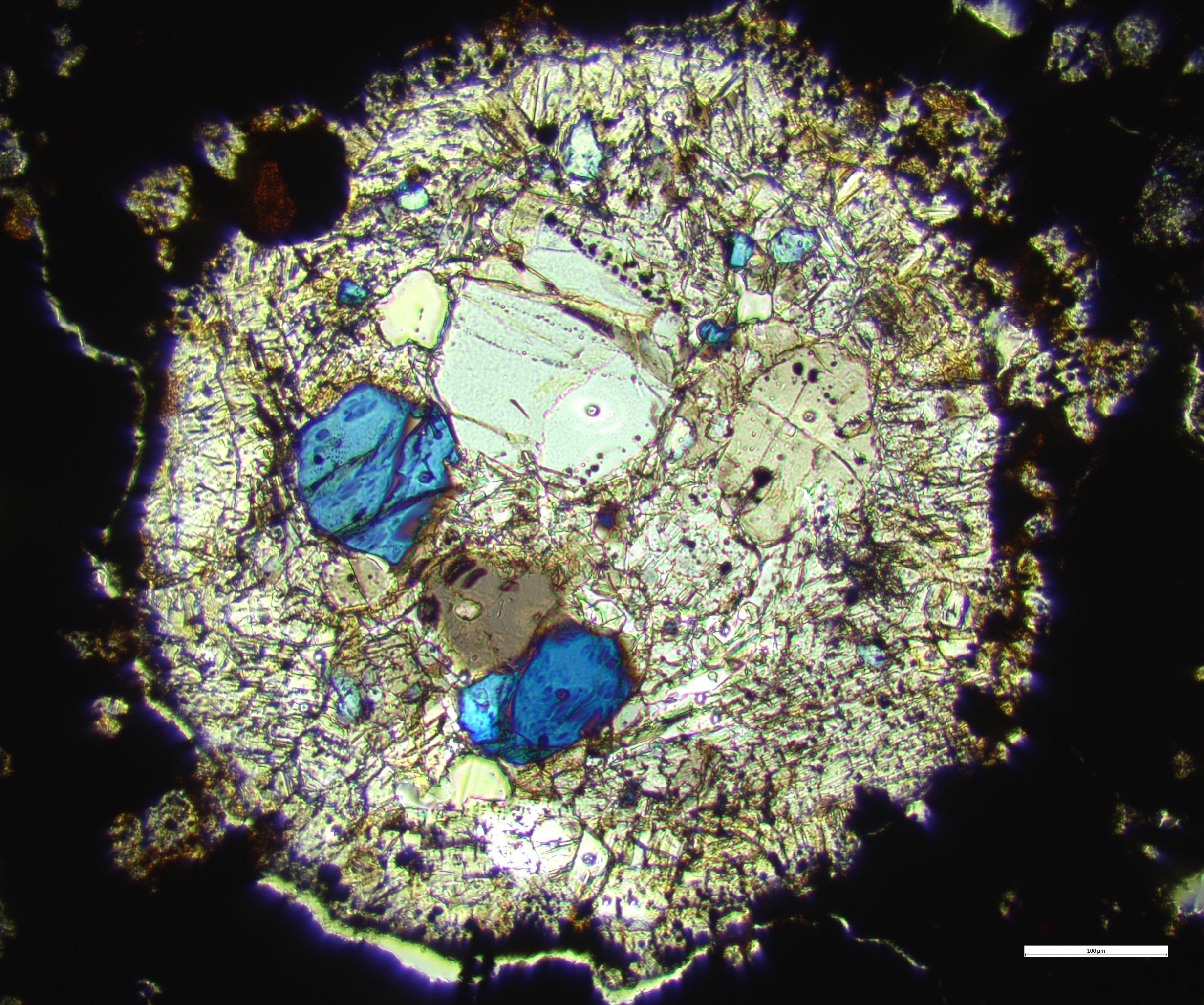
隕石には、太陽系誕生直後の情報を保持した固体物質物質(e.g., コンドルール; 図1)を含むものが存在し、そのような隕石をコンドライト隕石と言います。コンドライト構成物質の化学組成や同位体比には多様性があり、物質が形成された環境の違いを反映していると考えられています。そのため、これらの物質に記録された化学組成および同位体比を詳細に調べることで、物質形成時の原始太陽系円盤環境を明らかにすることができると期待されます。私は特に、固体物質の形成時期と形成環境(温度や酸化還元度)の同時決定に基づき、原始太陽系円盤環境の変遷を復元することを目的とした研究を行っています。
2) 高精度局所化学組成・同位体比分析手法の改良
コンドライト隕石はナノメートル~数百マイクロメートルの微細粒子から構成されています。したがって、個々の粒子の形成過程を明らかにするためには、小さい物質の化学組成・同位体比を精度良く測定する技術(=局所化学分析法)が必要です。
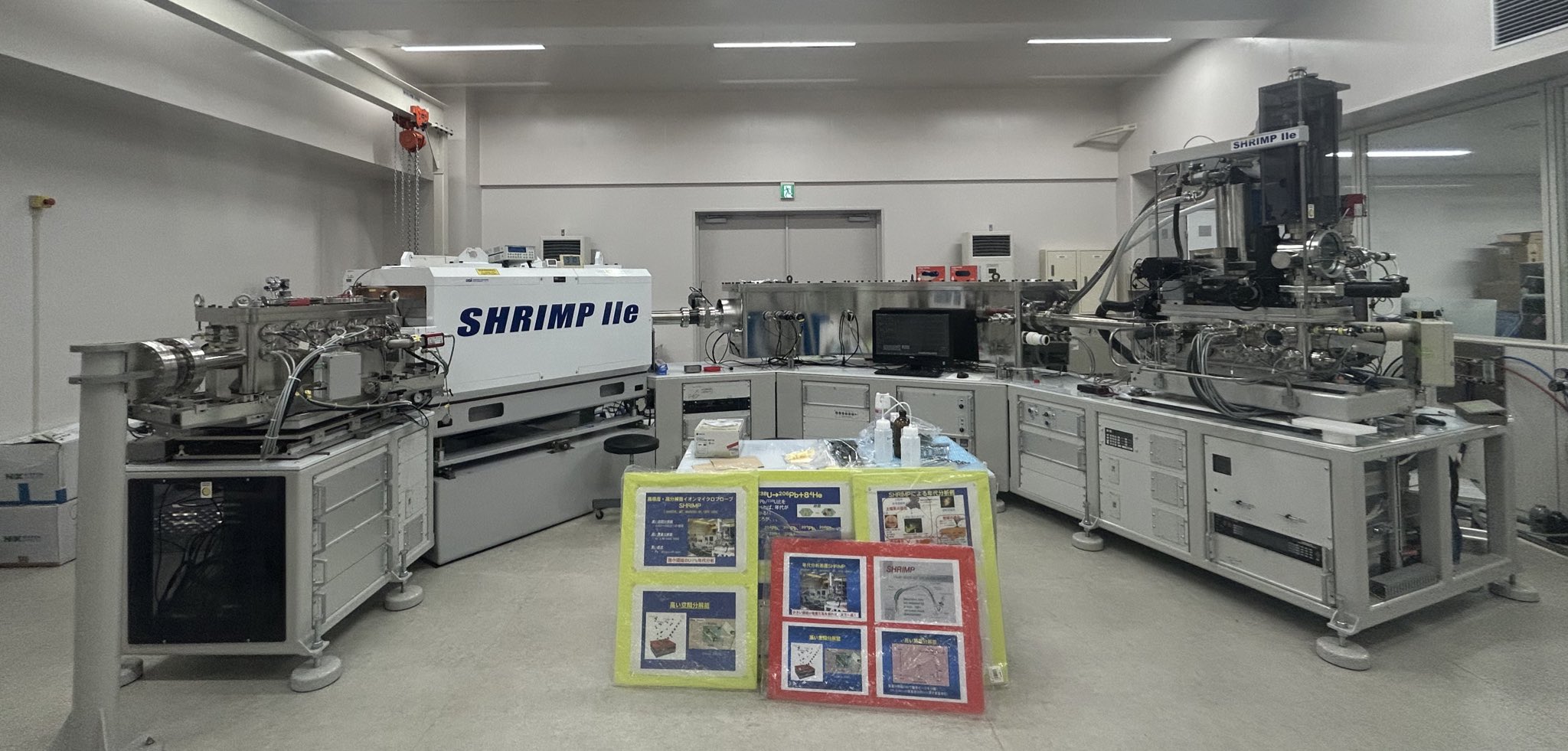
私はこれまで、二次イオン質量分析計(Secondary Ion Mass Spectrometor: SIMS)を用いた高精度局所化学分析法の改良に取り組んできました。SIMSは空間分解能が高く(マイクロメートルスケール)、地球試料や地球外試料の分析に広く応用されている局所分析法のひとつです。2025年2月、私の所属する大阪大学の惑星科学グループにSIMSの一種であるSHRIMP(Sensitive High Resolution Ion MicroProbe; 図2)が設置されました。SHRIMPは、数マイクロメートルまで細く絞ったイオンビームを試料に照射し、スパッタされた試料由来のイオンを計測することで、局所化学・同位体分析を行うことができます。現在、SHRIMPを用いた高精度同位体測定法の改良に取り組んでいます。
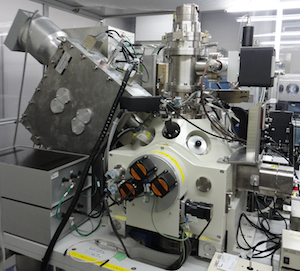
また、さらなる高精度局所分析法の確立に向けて、SIMSの弱点を克服することを目的とした新たな手法改良にも取り組んでいます。大阪大学の惑星科学グループでは、物理学専攻の質量分析グループと共同でSIMSよりも高空間分解能・質量分解能を有した二次中性粒子質量分析計(Secondary Neutral Mass Spectrometor: SNMS; 図3)の開発を進めています。現在、学生さんと共に数百ナノメートルスケールの微量元素分析法の開発・隕石物質への適用を進めています。
SHRIMPやSNMSを用いた地球外物質の研究に興味のある方は、是非一度研究室に遊びに来てください!
Research Interests
I study the formation and evolution of our Solar System, especially the first 10 million years in its history. My approach is to determine chemical compositions and isotopic ratios of extra-terrestrial materials (meteorites and returned samples; e.g., Hayabusa and Stardust missions), which tell us when, how, and perhaps where they formed. The chemical and isotopic records are keys to understand the physicochemical conditions of the protoplanetary disk and formation processes of planets. Based on the multi-element isotopic studies, I am trying to construct a chronological table for our solar system.
1) Formation processes of first-generation solids in our solar system
Primitive undifferentiated meteorites, chondrites, are known as sedimentary space rocks that are pieces of asteroids. Chondrites contain submicron to centimeter objects such as chondrules (Fig.1) that were likely formed at different timing and potentially different places in the protoplanetary disk. The chondritic components exhibit variations in their chemical compositions and isotopic ratios, which would reflect different formation conditions of each component. Pristine chondrites that avoided secondary alterations on the parent asteroids are expected to preserve formation histories of each component. Thus, detailed chemical and isotopic measurements of chondritic components will provide insights into the physicochemical conditions of the protoplanetary disk when and where they formed. Based on these information, I would like to reveal the formation, migration, and accretion processes of submicron to centimeter objects in the protoplanetary disk.
2) Improvements in high-precision in-situ chemical & isotopic analyses
Chondritic meteorites consist of fine-grained particles ranging from nanometers to several hundred micrometers in size. Therefore, to elucidate the formation processes of individual particles, it is essential to develop techniques that enable precise determination of chemical compositions and isotopic ratios of small materials, namely in-situ microanalytical methods.
I have been working on improving high-precision in-situ microanalytical techniques using a Secondary Ion Mass Spectrometer (SIMS). SIMS provides extremely high spatial resolution (on the micrometer scale) and is one of the most widely applied and powerful analytical techniques for both terrestrial and extraterrestrial materials. In February 2025, a large-radius SIMS instrument, SHRIMP IIe (Sensitive High Resolution Ion MicroProbe; Fig.2), was installed at the Planetary Science Group, the University of Osaka. The SHRIMP enables in-situ chemical and isotopic analyses by focusing an ion beam, narrowed down to a few micrometers in diameter, onto the sample and measuring the ions sputtered from the irradiated area. Currently, I am developing refined isotopic dating methods using SHRIMP with improved analytical precision.
Furthermore, to establish next-generation high-precision in-situ analytical techniques, I am also working on developing new methods to overcome the limitations of SIMS. In collaboration with the mass spectrometry group in the Department of Physics at the University of Osaka, we are developing a Secondary Neutral Mass Spectrometer (SNMS; Fig.3). Currently, we are developing trace element analysis techniques on the submicrometer (hundreds of nanometers) scale and applying them to meteoritic materials together with students.
If you are interested in studying extraterrestrial materials using instruments such as SHRIMP and SNMS, please feel free to visit our laboratory!